



How to Inspect Estate Jewelry Before You Buy
An estate jewel may have survived a century with remarkable grace, yet one overlooked repair, substituted stone, or weakened clasp can materially change its value and wearability. Knowing how to inspect estate jewelry begins with looking beyond its period charm. A serious examination considers condition, construction, materials, gemstone identity, and the evidence that supports a piece's history.
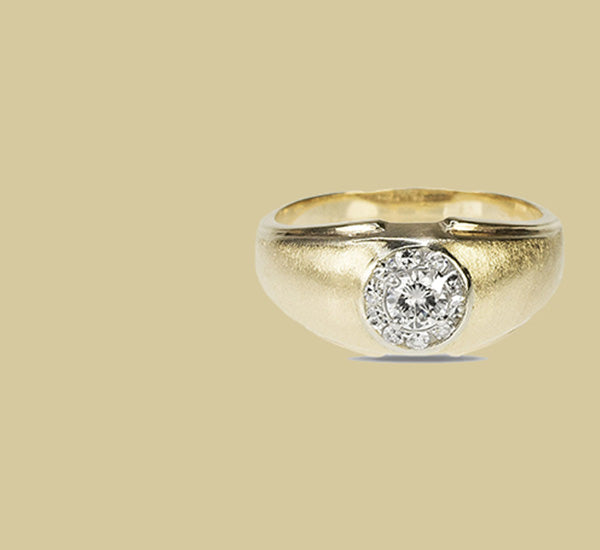
Estate jewelry encompasses previously owned fine jewelry from many eras, not solely antiques. A 1980s signed gold bracelet, an Art Deco diamond ring, and a mid-century sapphire brooch may all be estate pieces. Their appeal lies in individuality and craftsmanship, but each should be evaluated on its own merits rather than assumed valuable because it is old.
Start With the Whole Piece
Before studying a hallmark or lifting a loupe, observe the jewelry as a complete object. Does the design feel balanced? Are the proportions appropriate to the period it represents? Does the setting appear original to the center stone, or does something look newly assembled?
Wear and age are not defects by default. Fine estate jewelry should show an honest history, and gentle softening on high points of an older gold mounting is often expected. The question is whether the condition remains structurally sound and consistent. A ring with crisp engraving, secure prongs, and an intact gallery may be more compelling than one polished so aggressively that its original detail has been erased.
Look for visual interruptions: uneven color in the metal, mismatched engraving, irregular solder seams, or a shank that is notably thinner on one side. These signs do not automatically disqualify a piece. A careful restoration can preserve a jewel for another generation. They do, however, invite more questions about what has been altered and whether the price reflects that work.
Inspect Estate Jewelry for Metal and Hallmarks
Hallmarks offer useful evidence, although they are only one part of authentication. Examine the interior of a ring shank, the reverse of a brooch, the tongue of a clasp, or the back of an earring fitting for marks such as 14K, 18K, 750, 950, PLAT, or maker's signatures. A clear mark can establish metal fineness and sometimes identify a designer, workshop, or country of origin.
Wear can obscure hallmarks, particularly on rings that have been worn daily. Their absence is not proof that a piece is not precious metal. Conversely, a stamp alone is not proof of quality or authenticity. Marks may be added, misread, or associated with later components in a repaired jewel.
Consider the metal's appearance alongside its stamp. Platinum typically has a cool white-gray character and substantial feel, while older white gold can show a warmer tone beneath worn rhodium plating. Yellow gold varies considerably by karat and era. A jeweler should also examine the metal with appropriate testing methods when the composition is uncertain, especially before a significant purchase.
Examine Craftsmanship and Structural Condition
Fine workmanship often reveals itself in the details that are easy to miss from across a room. Under magnification, inspect prongs, bezels, galleries, hinges, pin stems, jump rings, and clasps. Prongs should be present, evenly formed, and firmly seated over the gemstone. A bezel should fit closely without obvious gaps or crushed edges.
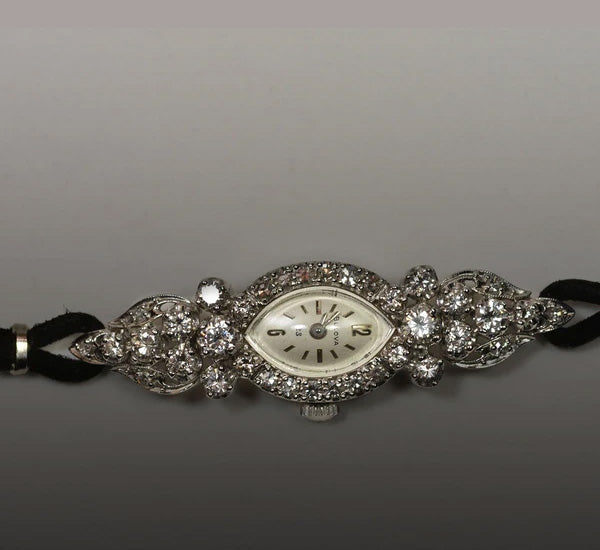
Pay special attention to moving parts. On a bracelet, open and close the clasp several times and check the safety catch, if present. On a brooch, see whether the pin is straight, the hinge is secure, and the catch holds tension. For earrings, inspect posts and backs for bending or thinning. A luxury watch requires its own detailed review of case, dial, bracelet, movement, and service history.
Older jewelry was often made by hand, so small asymmetries may be consistent with its construction rather than evidence of poor quality. What matters is the overall standard: clean settings, thoughtful proportions, durable joints, and a design that has not been compromised by careless repair.
Ask About Resizing and Restoration
Resizing is common and can be entirely appropriate. Still, it may affect engraved shanks, patterned bands, hallmarks, or the symmetry of a ring's shoulders. Ask whether a ring has been resized, whether stones have been replaced, and whether the mounting has been rebuilt or reinforced.
Repairs should be disclosed plainly. A well-executed restoration may enhance wearability and preserve an otherwise exceptional jewel. A poorly matched replacement stone or a visible solder repair may reduce collector interest, particularly in signed, period, or highly original pieces.
Assess the Gemstones Beyond Their Sparkle
A gemstone's beauty is only the beginning of its evaluation. View diamonds and colored stones in natural, diffuse light as well as focused indoor light. Look for liveliness, evenness of color, transparency, cutting quality, and any apparent abrasions, chips, or fractures.
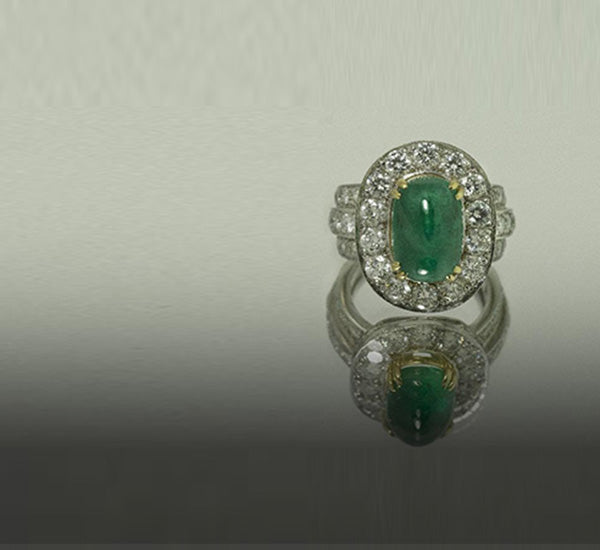
In diamond jewelry, inspect whether the stones appear consistent in color, clarity, cut style, and size. Antique diamonds such as Old European, old mine, and rose cuts have facet patterns and proportions that differ from modern round brilliants. Their softer, broader flashes of light can be especially appealing, but they should be judged according to their own character rather than modern-cut expectations.
For emeralds, rubies, sapphires, and other colored stones, color quality, origin, and treatment can have a profound effect on value. Natural Colombian or Zambian emeralds, unheated Sri Lankan sapphires, and fine natural rubies may command strong interest when their quality and supporting documentation are exceptional. Yet visual inspection alone cannot reliably establish geographic origin or determine every treatment.
An emerald may naturally contain jardin, a ruby may display silk, and a sapphire may have inclusions that help an experienced gemologist identify it as natural. Those features do not necessarily diminish desirability. Fracture filling, diffusion treatment, synthetic growth, and later stone replacements are different matters, and they require proper gemological examination rather than assumption.
Use Documentation as Evidence, Not Decoration
For important diamonds, a grading report from a respected laboratory such as GIA provides a valuable framework for assessing carat weight, color, clarity, cut, and identifying characteristics. Verify that the report corresponds to the stone being offered. If a diamond is laser inscribed, the inscription should be checked where appropriate.
Documentation for colored gemstones may address species, variety, treatment, and in some cases origin. These reports can be particularly meaningful for rare, high-value gems, where an unheated status or a notable origin may influence value substantially. The report date, laboratory, and exact wording all matter.
Provenance can include original receipts, photographs, period boxes, prior appraisals, auction records, and family history. It adds interest and, in certain cases, value. But provenance should be specific enough to evaluate. A velvet box with a famous retailer's name is appealing, though it does not by itself prove that the jewelry inside was originally sold by that house.
Verify Signed Jewelry With Care
Signed pieces deserve a more exacting review because the signature can carry a significant portion of the value. Examine the mark's font, placement, depth, and relationship to the construction. A genuine Tiffany & Co. signature, for example, should be considered alongside the design, metal quality, workmanship, period details, and known production characteristics.
Counterfeit marks and altered pieces exist, especially for widely collected houses. A seller's confidence is not a substitute for authentication. When evaluating Cartier, Tiffany & Co., Van Cleef & Arpels, or other notable makers, seek a knowledgeable specialist who understands both the brand and the era.
Know When a Professional Examination Is Essential
A close personal inspection is valuable, but it has limits. A trained jeweler or gemologist can test metal, assess setting integrity under magnification, distinguish common simulants from natural stones, identify indications of treatment, and determine when laboratory documentation is warranted.
For a meaningful purchase, ask direct questions: Is the center stone natural? Has it been treated? Are the gems original to the mounting? What is the metal content? Has the piece been repaired, resized, or restored? Is there a grading report or laboratory memo? A reputable jeweler will welcome these questions and answer with appropriate precision.
At Thayer Jewelers, careful selection begins with these same considerations: material significance, condition, authenticity, and the distinctive qualities that allow a jewel to endure. The most satisfying estate piece is not simply the one that looks beautiful in the case. It is the one whose craftsmanship, gemstones, and history remain convincing when examined closely - and whose character still feels personal when it becomes part of your own story.