



What Affects Emerald Ring Value? 8 Key Factors
An emerald ring can appear magnificent at first glance yet differ dramatically in value from another ring of similar size. What affects emerald ring value is not simply the number on a scale. A fine emerald is judged by the character of its green, the transparency that gives it life, the extent of any treatment, and the confidence its documentation inspires. The ring itself - its diamonds, mounting, maker, and condition - completes the picture.
For collectors and buyers of heirloom-quality jewelry, the most meaningful question is not whether an emerald is large or small. It is whether the stone possesses the rare combination of beauty, natural character, and provenance that will remain desirable over time.
What Affects Emerald Ring Value Most
1. Color is the first measure of distinction
Color is the principal value factor for emerald. Exceptional stones show a vivid, rich green with an attractive balance of hue, tone, and saturation. The finest examples are neither so dark that they lose brightness nor so light that they read as merely green beryl.
A touch of bluish green is often desirable, particularly in classic Colombian material, although the most beautiful color is not confined to one appearance or one locality. The goal is an open, luminous green that remains compelling in daylight and under evening light. Grayness, excessive yellow, or very dark tone can reduce value, even in a stone with substantial carat weight.
Color also has to be assessed face-up, once the gem is set. An emerald may have an appealing body color in isolation but appear subdued in a mounting with poorly chosen diamonds or metal. A skilled design uses proportion and contrast to let the emerald command attention.
2. Transparency and clarity determine liveliness
Emeralds are known for jardin, the natural internal features that can resemble a garden of moss, branches, or fine feathers. Unlike diamonds, emeralds are not expected to be flawless. In fact, natural inclusions are part of the gem's identity and can help distinguish a natural emerald from a laboratory-grown stone or imitation.
Still, the degree and nature of inclusions matter greatly. High-value emeralds have sufficient transparency for light to travel through the stone, creating a lively, crystalline appearance. Inclusions that make a gem look cloudy, opaque, fractured, or overly dark reduce its value. Surface-reaching fractures also require careful consideration, especially if they affect durability.
This is where an experienced eye is essential. A clean-looking emerald with little personality is not automatically superior to a more included stone with extraordinary color and glow. Value comes from the balance. Fine color can justify some visible jardin, while weak color rarely becomes exceptional simply because the stone is clean.
3. Origin can add collector appeal
Emerald origin may have a material effect on value when it is supported by a respected gemological laboratory report. Colombian emeralds are widely admired for their historic association with vivid, velvety green and can command significant premiums when their quality is commensurate with that reputation. Stones from Zambia are also highly regarded, often displaying a rich green with blue undertones and excellent transparency.
Brazil, Afghanistan, Ethiopia, and other sources can produce beautiful emeralds as well. Origin is not a substitute for quality. A beautiful Zambian emerald may be more valuable than an ordinary Colombian stone, just as an exceptional emerald from a less familiar source can be a compelling acquisition.
For a notable emerald, a report that identifies the stone as natural and offers an origin opinion provides important market context. It gives a future buyer more confidence and can be especially meaningful for a ring intended as an estate piece or long-term holding.
4. Treatment history changes the value equation
Most natural emeralds are clarity enhanced to some degree. Traditional cedarwood oil has long been used to lessen the visibility of fractures, while modern treatments may include other oils, resins, or polymers. The treatment itself is not necessarily a reason to reject a stone. The question is its extent and stability.
An emerald with minor oil enhancement is generally more desirable than one with moderate or significant enhancement. Resin-filled fractures are usually viewed less favorably because the treatment can be more consequential to appearance and long-term care. A laboratory report that describes the level and type of enhancement is therefore highly relevant to value.
Untreated emeralds are rare, and an untreated designation can command a premium when the stone also has fine color and transparency. However, untreated is not a universal shortcut to value. A pale, heavily included untreated emerald may not be as beautiful or as valuable as a lightly treated stone of superior color and brilliance.
5. Carat weight and cut must work together
Larger emeralds are rarer, particularly when they retain strong color and transparency. Price often rises sharply at important size thresholds, but carat weight alone can be misleading. A broad, shallow stone may look large while carrying less depth and diminished life. Conversely, a well-proportioned emerald can appear remarkably elegant for its weight.
The classic emerald cut was developed in part to protect this comparatively brittle gem from corner damage. Its step facets can reveal both transparency and color with great honesty. Oval, cushion, pear, and cabochon cuts may also be highly desirable, depending on the material and period of the ring.
Fine cutting preserves weight only when it does not compromise beauty. Look for even outlines, balanced faceting, good symmetry, and a center that does not appear excessively dark or transparent. A window, where one can see through the center too easily, and extinction, where areas remain black, can lessen visual appeal.
6. The diamonds and setting are part of the appraisal
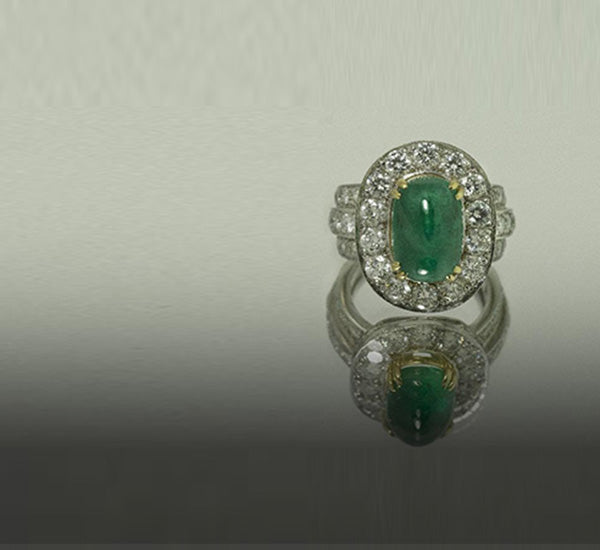
An emerald ring is a complete jewel, not just a center stone. High-quality side diamonds can materially elevate its value, especially when they have well-matched color, clarity, cutting, and proportion. A three-stone ring with fine old European-cut diamonds tells a different story from a contemporary halo set with commercial-grade melee.
Platinum and 18-karat gold are traditional choices for important emerald rings. Platinum offers strength and a cool contrast that can emphasize a bluish green emerald. Yellow gold can enrich warmer green tones and may be appropriate for an antique or vintage design. The metal's purity, weight, condition, and workmanship all contribute to intrinsic and market value.
Craftsmanship shows in the details: clean prongs, secure corners, precise gallery work, graceful proportions, and a setting that protects the emerald without concealing it. A poorly fitted mounting can place unnecessary pressure on the stone, while a thoughtfully engineered setting helps preserve a ring for generations.
7. Maker, period, and provenance can create another tier of value
A signed ring from a recognized house, or an exceptional period jewel from Art Deco, Edwardian, or Retro eras, may carry value beyond its individual materials. Original design, documented provenance, and period-correct workmanship matter to collectors. So does condition. Replaced shanks, altered settings, or recut gemstones are not always disqualifying, but they should be reflected in the evaluation.
Estate rings can be particularly appealing because they offer qualities difficult to reproduce: hand-finished details, old-cut diamonds, distinctive proportions, and a sense of permanence. A signature alone does not guarantee superior value, but an authenticated signed piece with exceptional gemstones can occupy a more collectible market.
8. Documentation and condition protect confidence
For significant emerald rings, supporting documents can make the difference between an attractive purchase and a well-substantiated one. Laboratory reports, original receipts, prior appraisals, maker documentation, and records of restoration help establish what is being offered.
Condition deserves the same scrutiny. Emeralds are more vulnerable to impact and thermal shock than diamonds, so chipped corners, abraded facet edges, open fractures, and worn prongs need professional assessment. A ring can often be restored sympathetically, but the work should preserve its integrity rather than erase its history.
Value Depends on the Purpose of the Evaluation
A retail replacement appraisal, an insurance valuation, and a resale offer are not interchangeable figures. Replacement value considers what it may cost to replace a comparable ring through a retail channel. Resale value reflects current demand, condition, liquidity, and the price a knowledgeable buyer is prepared to pay. Estate jewelry with an exceptional emerald, documented origin, and distinguished design may perform differently from a newly made ring with similar stated specifications.
For that reason, broad online price estimates are limited. A meaningful evaluation requires the ring in hand, with careful observation of the emerald under proper lighting, inspection of the mounting, review of documentation, and comparison with the present market for fine natural gemstones.
The most rewarding emerald rings are not defined by a single specification. They bring together a green that feels alive, a natural stone whose treatment and origin are understood, and craftsmanship worthy of carrying that gem forward. When those qualities align, the ring becomes more than an ornament - it becomes a piece of lasting significance.