



How to Authenticate Tiffany Jewelry With Confidence
A Tiffany & Co. piece can look convincing from across a room, especially when the design itself is simple: a sterling heart tag, a classic link bracelet, a diamond solitaire, or a small blue-box-era pendant. Knowing how to authenticate Tiffany jewelry requires a closer view. Authenticity is rarely established by one stamp, one pouch, or one appealing detail. It is the consistency of materials, workmanship, markings, design, and provenance that creates a credible conclusion.
For signed estate jewelry, that distinction matters. A genuine Tiffany piece may carry collector appeal beyond its precious-metal or gemstone value, while a counterfeit can be deceptively polished, well photographed, and incorrectly represented. A careful examination protects both the pleasure of ownership and the value of an important purchase.
How to Authenticate Tiffany Jewelry: Start With the Whole Piece
Begin by assessing the jewelry as an object, not merely its signature. Tiffany & Co. has produced jewelry across many decades, in sterling silver, gold, platinum, and occasionally alternative materials. The expected details will differ between a Victorian-era brooch, an Elsa Peretti design, an Atlas collection ring, and a contemporary diamond engagement ring. There is no single hallmark pattern or construction method that applies to every authentic piece.
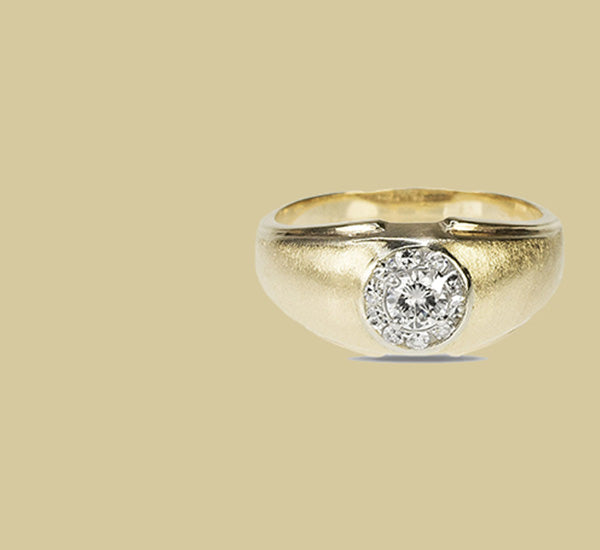
What should remain consistent is quality. Fine Tiffany jewelry is generally well finished, with clean edges, balanced proportions, secure settings, and intentional surface treatment. On a polished gold ring, the interior should feel finished rather than rough or thin. On a pavé jewel, diamonds should be set evenly, with tidy beads and no obvious gaps, wobble, or excess metal. Hinges, clasps, and jump rings should operate smoothly and feel proportionate to the piece.
Counterfeits often reveal themselves through accumulated small compromises: soft or uneven engraving, lightweight construction, poor symmetry, sharp cast seams, low-quality plating, or stones that appear loosely fitted. One imperfect area does not automatically mean a piece is counterfeit, particularly with older estate jewelry that has been worn or repaired. The question is whether the workmanship is coherent with Tiffany’s standards and the age of the jewel.
Read Hallmarks Carefully, But Do Not Rely on Them Alone
A Tiffany signature is an important clue, not final proof. Genuine pieces are commonly marked with variations of TIFFANY & CO., TIFFANY & Co., or T & CO., along with metal-quality marks such as 925, STERLING, 750, 18K, PT950, or PLAT. The placement, spacing, and typeface should appear deliberate and crisp for the era and style.
Examine the mark under magnification when possible. Authentic engraving is generally sharp and properly aligned with the form of the jewelry. Counterfeit stamps may look shallow, irregular, crowded, overly dark, or mechanically generic. Misspellings are an immediate concern, but correct spelling alone is not persuasive. Reproductions can copy a wordmark while missing the precise scale, letter forms, and placement found on an original.
It is also wise to understand that hallmark conventions change. Older Tiffany jewelry may carry different marks than current production, and some pieces have marks partly softened by polishing or wear. A missing or faint mark merits further review, but it should not be judged in isolation. Conversely, a bright, deeply stamped hallmark on a heavily worn item can be a reason to question whether a component was added later.
Verify the Metal Rather Than Trusting Its Color
Sterling silver is frequently imitated with plated base metal. Gold-tone jewelry may be plated rather than solid gold, and a counterfeit diamond ring may use lower-value materials beneath an attractive surface. A professional evaluation can confirm metal composition through non-destructive testing, including X-ray fluorescence analysis, rather than relying on appearance alone.
For sterling pieces, inspect areas of wear around clasps, edges, and high-contact surfaces. Plating that has worn through can expose a different-colored metal underneath. Genuine sterling will naturally tarnish over time, although tarnish itself is not proof of authenticity. A heavily polished silver piece may look almost new, while an authentic estate jewel may show an even, attractive patina.
Gold and platinum jewelry should have the substance expected of their design. A substantial gold bracelet should not feel hollow or fragile unless the construction clearly indicates it was intentionally made that way. A platinum setting should have crisp, durable prongs and a density appropriate to the metal. Weight alone cannot authenticate a Tiffany piece, but an unexpectedly light feel is worth investigating.
Study the Design Against Known Period Details
Tiffany designs have been widely copied because many are instantly recognizable. A heart tag, open-heart pendant, bean form, key pendant, T motif, or diamond solitaire can be visually close to the original while still lacking the correct proportions and finishing. Compare the piece with verified examples from the same collection and approximate era, paying close attention to dimensions, chain links, clasp style, logo placement, and the relationship between individual components.
This is especially relevant for iconic designers. Elsa Peretti jewelry is known for organic, fluid forms and a highly resolved finish. Paloma Picasso pieces often have distinctive graphic proportions. Jean Schlumberger designs possess intricate, sculptural detail and refined gem setting. An authentic signed piece should feel considered from every angle, including its underside.
Do not assume that a design absent from a current catalog is counterfeit. Tiffany has a long history, and discontinued, vintage, limited-production, and special-order pieces exist. In that circumstance, provenance and expert comparison become more valuable than an online catalog search.
Consider Gemstones, Diamonds, and Setting Quality
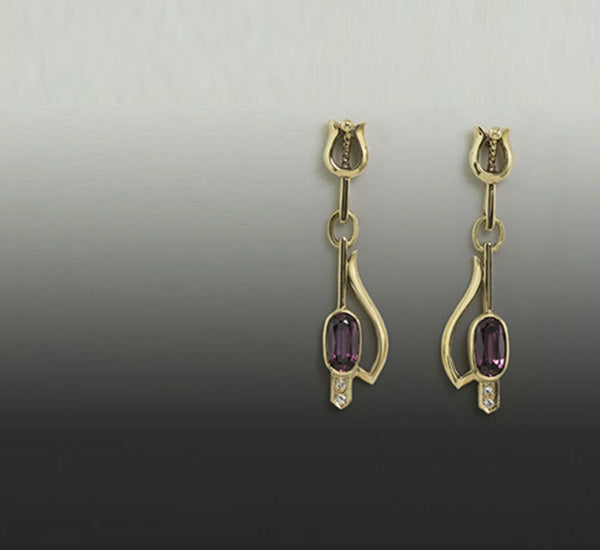
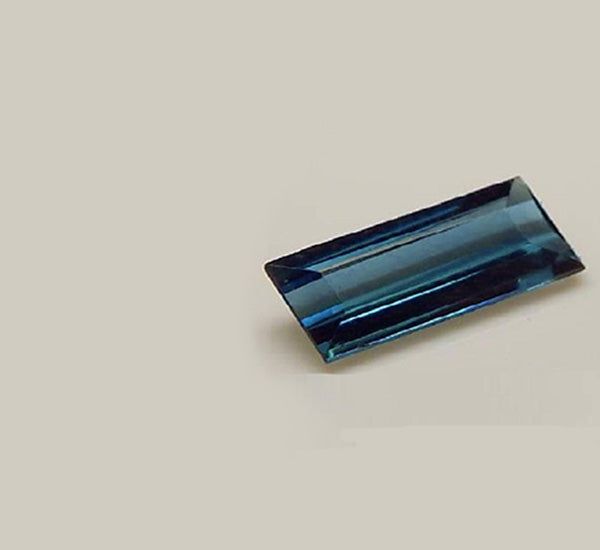
For diamond and gemstone jewelry, authentication extends beyond the Tiffany signature. Examine whether the stones are consistent with the quality and setting style expected for the piece. Well-matched diamonds should show a harmonious appearance in color, size, and cutting. Colored gemstones should be securely set and appropriately finished, with no careless damage at the girdle or crown from poorly executed setting work.
A Tiffany diamond engagement ring may be accompanied by documentation, but papers should be assessed alongside the ring itself. A report number, receipt, appraisal, or presentation folder can support provenance, yet each can be separated from its original jewel or reproduced. Documentation is valuable when its descriptions, measurements, metal, diamond details, and dates align with the physical piece.
For significant diamonds, a gemological examination can identify whether a stone is natural or laboratory-grown and evaluate its quality characteristics. For colored stones, origin and treatment can materially affect value, although those questions are distinct from whether the mounting is genuine Tiffany. A proper appraisal should address both the jewel’s signed status and the quality of its components.
Treat Packaging and Provenance as Supporting Evidence
A Tiffany Blue box, pouch, ribbon, shopping bag, or polishing cloth is appealing, but none should be treated as authentication. Packaging is often retained, sold separately, or reproduced. Its condition may also be inconsistent with the age of a genuinely old piece. Consider it supporting evidence only when it accompanies a jewelry item that already appears correct in material, workmanship, and markings.
More persuasive provenance includes an original sales receipt describing the item, service records, prior appraisals with photographs, family records, and a documented purchase history. Even then, verify that the paperwork belongs to the specific jewel in hand. Measurements, gemstone weights, and identifiable design details should match.
When purchasing online, request clear photographs of the front, back, hallmarks, clasp, settings, and any serial or style information. Ask for dimensions, gram weight, metal fineness, diamond or gemstone details, repair history, and return terms. A seller who cannot provide basic material information or avoids close photographs introduces unnecessary uncertainty.
When an Expert Opinion Is Worthwhile
A professional review is prudent when a Tiffany piece carries meaningful value, contains important diamonds or colored gemstones, has unusual age or design, or is being considered for resale, insurance, or estate division. It is also advisable when hallmarks and workmanship give mixed signals. Authentication is particularly nuanced where an original Tiffany component may have been altered, resized, repaired, or joined to a later chain or mounting.
An experienced fine-jewelry professional can assess construction under magnification, test metal, inspect gemstone setting, compare signatures to known period examples, and distinguish ordinary wear from issues that compromise originality. At Thayer Jewelers, signed estate jewelry is evaluated with the same attention given to material quality, craftsmanship, and long-term value.
The most satisfying Tiffany acquisition is not simply one that carries a famous name. It is a piece whose details stand together convincingly - a well-made jewel with credible materials, appropriate design, and a history you can understand well enough to enjoy for years to come.