



Natural Diamonds Versus Lab Diamonds for Buyers
A diamond may look equally brilliant across a showroom counter, yet the decision between natural diamonds versus lab diamonds reaches well beyond sparkle. Its origin affects rarity, price behavior, documentation, and the meaning a buyer assigns to the jewel over decades of ownership.
For an engagement ring, an estate piece, or a significant diamond acquisition, there is no universal correct answer. The right choice depends on whether your priorities rest with geological rarity, visual size, budget allocation, provenance, or long-term collectibility. A clear understanding of the differences makes the decision feel less like a debate and more like a personal standard.
Natural Diamonds Versus Lab Diamonds: The Essential Difference
Natural diamonds formed deep within the earth over billions of years under extreme heat and pressure. Their path to the surface, often through ancient volcanic events, is part of what makes each natural diamond a finite geological object. Every natural diamond has its own combination of crystal growth, inclusions, color characteristics, and history.
Lab-grown diamonds are diamonds as well. They have the same basic chemical composition - carbon arranged in a crystalline structure - and substantially the same optical and physical properties as natural diamonds. They are created in controlled facilities, most commonly through High Pressure High Temperature, or HPHT, and Chemical Vapor Deposition, or CVD, methods.
The distinction is therefore not one of “real” versus “fake.” Diamond simulants such as cubic zirconia or moissanite are different materials. A laboratory-grown diamond is a diamond, but it has a different origin, production model, and market position from a natural diamond.
That origin matters especially in fine jewelry. Natural diamonds are limited by nature. Lab-grown diamonds can be produced repeatedly as technology, capacity, and demand permit. This difference in scarcity is central to how the two categories are priced and valued.
Beauty Is Judged by Quality, Not Origin Alone
A beautiful diamond is not automatically natural, nor is every lab-grown diamond exceptional. In either category, quality depends on the familiar criteria of cut, color, clarity, and carat weight. Among these, cut often has the strongest influence on visible fire, scintillation, and brightness.
A well-proportioned round brilliant diamond with strong symmetry and polish can appear remarkably lively, whether it formed in the earth or in a laboratory. Conversely, a larger stone with poor proportions can look less impressive than a smaller, finely cut diamond. Buyers comparing diamonds should view them in varied lighting and assess how each stone performs, rather than relying only on a grading line or a large carat number.
There are, however, characteristics that deserve closer review in lab-grown diamonds. Some CVD-grown diamonds may exhibit strain patterns, graining, or color nuances that call for experienced evaluation. HPHT treatment can also be used after growth to alter color or improve appearance. None of these factors disqualifies a stone, but they should be accurately disclosed and reflected in its grading documentation.
Natural diamonds likewise require careful examination. Inclusions, fluorescence, transparency, and the placement of clarity features can have a meaningful effect on beauty and value. A GIA grading report provides an independent framework for assessing a natural diamond’s quality, while a respected laboratory report should identify a lab-grown diamond clearly as laboratory-grown and state any detectable post-growth treatment.
Price: More Diamond for the Initial Budget
Lab-grown diamonds generally offer substantially greater size or higher apparent quality for a given initial budget. For a buyer who wants a three-carat center stone, a particular shape, or an ambitious visual presence without directing the full budget toward the diamond alone, that advantage can be compelling.
The savings may allow room for a hand-finished platinum mounting, a more intricate setting, colored gemstone accents, or a wedding band that completes the design. This is a practical consideration, not a lesser one. A well-made ring that is enjoyed every day has real value to its owner.
Natural diamonds command higher prices because supply is finite, demand is established across generations, and the finest examples remain scarce. Within natural diamonds, value is not evenly distributed. Stones with exceptional color, high clarity, impressive size, distinguished cuts, or unusual provenance occupy a different market from commercial-quality goods.
Comparing only carat weight can obscure this reality. Two one-carat diamonds may have dramatically different prices because one is a finely cut, high-color, eye-clean natural diamond with a GIA report, while the other has compromises in transparency, fluorescence, cut precision, or documentation. The same principle applies when comparing a natural diamond with a lab-grown stone.
Rarity, Resale, and Long-Term Ownership
A diamond should be purchased first for the pleasure of wearing it, not with the expectation of a guaranteed financial return. Fine jewelry is not a uniform investment category, and resale value depends on quality, market demand, condition, mounting, documentation, and the channel through which a piece is sold.
Still, buyers who care about long-term ownership should understand the market distinction. Natural diamonds, particularly well-selected stones with strong grades and trusted certification, have an established secondary market. Rarity supports collector interest, though it does not eliminate normal market variation or the difference between retail price and resale value.
Lab-grown diamonds have experienced substantial price reductions as manufacturing capacity has expanded and production technology has advanced. A lab-grown diamond may retain sentimental value and may remain a beautiful component of a finished jewel, but it should not generally be chosen for scarcity or for an expectation of comparable resale behavior to a natural diamond.
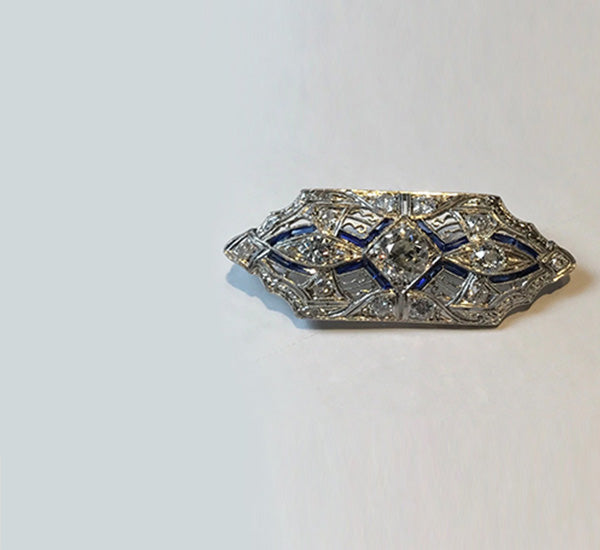
This is where the setting deserves attention. A distinctive antique ring, a signed jewel, or a finely crafted platinum mounting can have value that extends beyond its center stone. In estate jewelry, craftsmanship, period design, condition, and provenance can be as important as diamond weight. A natural diamond often complements this collector-oriented character, but a lab-grown diamond can also be thoughtfully set in a newly made heirloom design when the priorities are clear.
Ethical and Environmental Questions Require Precision
Many buyers begin with the assumption that lab-grown diamonds are automatically the more sustainable or ethical option. The subject is more nuanced. Laboratory production avoids mining, but it requires significant energy, and environmental impact varies according to the power source, manufacturing process, and individual producer’s practices.
Natural diamonds involve mining, land management, and complex supply chains. Responsible sourcing programs, chain-of-custody practices, and transparent supplier relationships matter greatly, but broad claims should be examined rather than accepted at face value.
For either category, ask direct questions about documentation and sourcing. An informed jeweler should be able to explain what a report verifies, what it does not verify, and how the origin of the diamond is disclosed. Ethical purchasing begins with accuracy, not marketing language.
How to Choose the Diamond That Belongs in Your Story
Start with the purpose of the piece. A buyer selecting a diamond for a once-in-a-lifetime engagement ring may value natural origin, rarity, and future family stewardship. Another may prefer a larger lab-grown diamond and direct more of the budget toward design, travel, or other priorities. Both choices can be thoughtful when made with full information.
Then establish the qualities that cannot be compromised. For some, that is exceptional cut and light performance. For others, it may be a natural diamond with a GIA report, an antique-cut stone with character, or a lab-grown diamond that reaches a desired visual scale. Consider shape as well: an elongated oval, emerald cut, old European cut, and round brilliant each present carat weight and light differently.
Finally, evaluate the complete jewel rather than the center stone in isolation. Confirm metal purity, craftsmanship, setting security, proportions, certification, and any relevant treatment disclosures. The diamond should suit the hand, the design, and the life it will lead.
At Thayer Jewelers, the most meaningful selection conversations are rarely about choosing a side. They are about recognizing the qualities that will still matter when the ring becomes part of a family’s history. Choose the diamond whose origin, beauty, and place in the finished jewel give you confidence every time you look at it.